Season 6: Shadow Rainforest — The Alliance Leader's Complete Mechanics Guide
Complete Season 6 Shadow Rainforest mechanics breakdown for alliance leaders — factions, altars, city destruction, pacts, hero awakening, and strategy.
What Is Season 6?
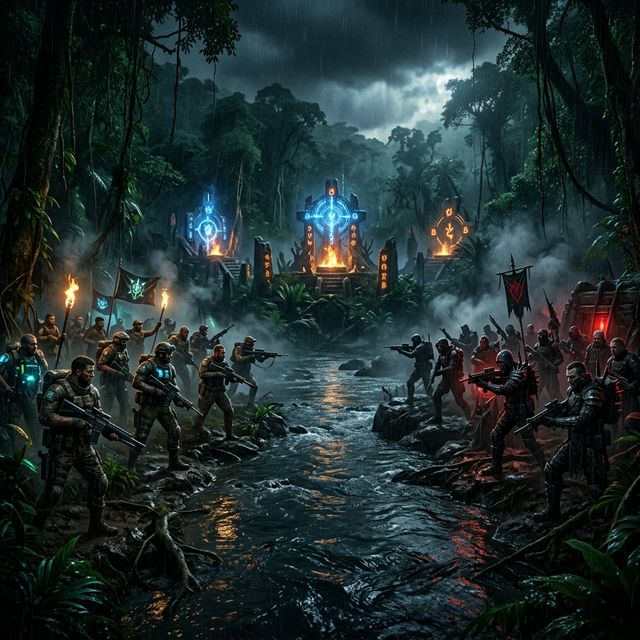
Season 6 — Shadow Rainforest — drops the battlefield into the legendary Lost Land, a jungle continent ruled by three clans: Deepwood, Wetland, and the neutral Great River Clan. This season continues the massive 8-warzone map format introduced in Season 5, but layers on game-changing new systems that demand a completely different level of alliance coordination.
If you’re an R4 or R5 reading this, pay attention. Season 6 isn’t just another reskin. The introduction of permanent city destruction, faction-wide warfare, and the Altar strategic system means the decisions you make as an alliance leader will carry more weight — and more consequences — than any previous season.
⚠️ WARNING: Pre-Release Information These details come from official announcements and early previews. Some specifics may change before your server’s Season 6 launch. We’ll update this guide as more information is confirmed in-game.
The Map: 8 Warzones + Central Area
The Season 6 map follows the same large-scale structure as Season 5 — eight warzones surrounding a contested central zone — but adds critical new layers.
The eight warzones are split evenly into two factions: four belong to Deepwood and four belong to Wetland. The central area is controlled by the Great River Clan, a neutral force that holds high-value resources and capturable Altars.
The map is mirrored — Deepwood and Wetland territories look different aesthetically (jungle vs. marshland), but contain identical resource distributions. This means neither faction has a built-in resource advantage; it all comes down to coordination and execution.
Warzone Layout (A–H)
The eight warzones are labeled A through H and split across two faction territories:
| Faction | Warzones | Position on Map |
|---|---|---|
| Faction 1 (Deepwood) | A, B, C, D | Top half of the map |
| Faction 2 (Wetland) | E, F, G, H | Bottom half of the map |
| Neutral (Great River) | Center | Golden Palace / Altar zone |
Each warzone contains up to 6 numbered positions (e.g., A1 through A6, B1 through B6). The “1” position in each zone is the primary stronghold — the largest and most valuable target — while positions 2–6 are smaller satellite strongholds that surround it.
Inner warzones (C, D on top; E, F on bottom) sit closest to the center and provide the fastest approach to the central objectives. Outer warzones (A, B on top; G, H on bottom) are farther from the center but often have more satellite positions to secure.
Building Types & Hierarchy
The map features five distinct building types, each representing a different tier of strategic value:
| Building Type | Examples | Strategic Value |
|---|---|---|
| Small Stronghold | Outer satellite positions (A2–A6, B2–B6, etc.) | Entry-level captures, path-clearing |
| Medium Stronghold | Mid-tier positions closer to center | Resource generation, territory bridging |
| Large City | C1, D1, E1, F1 (inner warzone primaries) | High influence points, faction frontline |
| Military Fortress | A1, B1, G1, H1 (outer warzone primaries) | Defensive anchors, major influence |
| Golden Palace | Center of map | Ultimate objective, highest value |
Weekly Unlock Schedule
Positions open in a phased schedule across three weeks, creating a natural escalation of conflict:
| Week | What Opens | Color on Map | What This Means for Leaders |
|---|---|---|---|
| Week 1 | Small Strongholds (outer positions 2–6) | 🟥 Red | Land grab phase — secure your warzone perimeter and push toward the center |
| Week 2 | Large Cities & Medium Strongholds (primary “1” positions) | 🟩 Green | Major war phase — faction-level coordination required for high-value captures |
| Week 3 | Golden Palace / Central Objective | 🟦 Blue | Final phase — all-out faction war for the center |
⚠️ WARNING: Week 2 Is Where Wars Are Won or Lost The transition from Week 1 (small strongholds) to Week 2 (large cities and fortresses) is the biggest power spike on the map. If your alliance hasn’t secured a clean perimeter in Week 1, you’ll be fighting on two fronts when the primary positions unlock. Get your outer strongholds locked down early.
💡 PRO TIP: Map Awareness Is Everything As an alliance leader, study the mirrored layout early. The inner warzones (C, D, E, F) have the fastest route to the central Altars and Golden Palace, but they’re also the most exposed to cross-faction attacks. If your alliance draws an inner warzone, prioritize defense coordination with your Pact partner immediately. Outer warzones (A, B, G, H) have more breathing room but longer supply lines to the center — plan your approach route through allied inner warzones using shared Pact territory.
Factions: Deepwood vs. Wetland (4v4)
This is the biggest structural change for alliance leaders. Season 6 splits all participating alliances into two factions of four warzones each. Alliances within the same faction can collaborate, share territory, and support each other in ways that weren’t possible before.
What this means for you as a leader:
Your alliance isn’t fighting alone anymore. You’ll need to coordinate with up to three other alliance leaders in your faction. Faction success determines a huge chunk of your rewards, so internal faction politics — who pushes where, who defends what, who goes for Altars — will matter just as much as your individual alliance strength.
Faction selection is tied to your warzone assignment. Once your alliance is placed into a Deepwood or Wetland warzone, your faction is locked in for the season.
ℹ️ NOTE: Faction Rewards Are Multi-Tiered Season 6 introduces a new multi-tier faction reward system. The highest tiers (up to Tier 6) offer up to 300 Season Merit Medals, shards, and Armorman Core rewards. Reaching the top tiers requires destroying enemy faction capitals — making inter-faction coordination essential for maximum payouts.
The Altar System: Your New Strategic Objective
Altars are a brand-new building type found exclusively in the central Great River Clan territory. Capturing them unlocks powerful alliance-wide skills that can swing entire wars. This is the single most important new mechanic for alliance leaders to understand.
Key rules:
- You do not need adjacent land to capture an Altar. This means snipe attacks on Altars are a real possibility — and a real threat.
- Altars provide faction-wide buffs, not just alliance buffs. Holding an Altar helps every alliance in your faction.
- There are five tiers of Altars, each unlocking a unique and increasingly powerful skill.
Altar Tier Breakdown
| Altar Level | Skill Name | Effect |
|---|---|---|
| Level 0 | Frog’s Gift | Basic resource/support buff |
| Level 1 | Snake Barrier | Structural protection for buildings |
| Level 2 | Night Army | Summons mummy army units to fight alongside your troops |
| Level 3 | Serpent Breath | Warlord Missile — massive area damage ability |
| Level 4 | Thunder Feathers | Tesla Coil — powerful AOE defense/attack |
| Level 5 | Tranquil Rewind | Cooldown Reset — refreshes all alliance skill timers |
⚠️ WARNING: Altar Control Is a Faction-Level Decision Don’t try to capture Altars solo. The Level 3+ skills (Warlord Missile, Tesla Coil, Cooldown Reset) are war-defining abilities. Coordinate with your faction leadership to decide which alliance pushes for which Altar, and when. A poorly timed Altar grab can leave your faction overextended and vulnerable.
💡 PRO TIP: Prioritize Level 3+ Altars The lower-tier Altars are nice-to-haves, but the Level 3 Serpent Breath (Warlord Missile) and Level 5 Tranquil Rewind (Cooldown Reset) are the real prizes. Build your faction’s central-zone strategy around securing these first.
City Destruction: The Permanent Consequence
This is the mechanic that will separate experienced alliance leaders from everyone else. In Season 6, enemy cities can be permanently destroyed after capture.
How it works:
- Capture an enemy city the normal way.
- After capture, you can initiate a destruction sequence that progresses to 100%.
- Once a city reaches 100% destruction, it is permanently removed from the map.
- Destroyed cities cannot be restored — they’re gone for the rest of the season.
- Destruction directly reduces the enemy alliance’s Influence Points, which affects rankings and rewards.
Why this is a big deal for alliance leaders:
Unlike previous seasons where losing a city was a setback you could recover from, Season 6 makes city losses potentially catastrophic. Every city your alliance loses and can’t recapture before it’s destroyed is a permanent hit to your ranking.
This also means defense matters more than ever. You can’t just focus on aggressive expansion and plan to rebuild later. Once it’s gone, it’s gone.
⚠️ WARNING: Total War — All 8 Zones Are Battlefields Combat is no longer concentrated in the center zone. All eight warzones are active battlefields with attack and defense happening simultaneously. As a leader, you need defensive assignments for your home territory while also contributing to offensive pushes — splitting your focus is unavoidable.
💡 PRO TIP: Prioritize High-Value Destruction Targets Coordinate with your faction to identify which enemy cities are worth the effort to destroy. Taking out a top-ranked alliance’s key cities can cripple their influence score for the entire season. Target strategically, not randomly.
Alliance Pacts: Cross-Alliance Coordination
Season 6 formalizes what many servers already do informally — allied alliances working together. The new Alliance Pact system lets same-faction alliances form official partnerships.
Pact benefits:
- Shared Territory: Use your pact partner’s land to stage attacks on nearby enemy cities. No more being blocked by friendly territory.
- Coordinated Defense: Send reinforcements to your pact partner’s cities and territory.
- Joint Operations: Plan and execute combined offensives with a higher level of coordination.
Pact limitations:
- Pacts can only be formed between alliances in the same faction.
- Each alliance can have only one Pact active at a time.
- Changing your Pact partner requires a cooldown period — you can’t swap pacts on the fly during a war.
💡 PRO TIP: Choose Your Pact Partner Carefully Since you’re locked to one Pact at a time with a cooldown for switching, this is essentially a season-long marriage. Pick the alliance that complements your strengths — if you’re offense-heavy, pact with a defensively strong alliance (and vice versa). Coordinate your pact choice with broader faction leadership so coverage is optimal across all four warzones.
Hero Awakening: The Promote Progression System
Season 6 introduces a new hero advancement path called Promote Progression that allows designated heroes to reach an Awakened stage.
How it works:
- Certain heroes become eligible for Awakening once they meet specific promotion conditions.
- Awakening replaces the hero’s original 4th skill with a new, more powerful Awakening Skill.
- The Awakening Skill inherits the effects of the original skill but adds new abilities on top.
- Awakening provides a major Power stat boost and significant performance improvements.
- Awakening uses universal awakening shards (covering attack, HP, and defense attributes).
Promotion heroes confirmed for Season 6: Venom first, followed by Braz (both missile heroes). No new exclusive weapons are being introduced for these promotion heroes — use your shards on existing weapons instead.
ℹ️ NOTE: Awakening Is a Long-Term Investment Don’t expect to Awaken heroes on Day 1. The Promote Progression system is designed to be a gradual advancement. As an alliance leader, identify which of your top rally leads and war participants should prioritize Awakening and coordinate shard distribution within your alliance accordingly.
Faction Technology & Influence Tiers
Two interconnected progression systems fuel your faction’s power throughout the season:
Faction Technology works like a collective research tree. All faction members contribute resources toward shared technology upgrades that boost overall battle power for everyone in the faction. The more your faction contributes, the stronger everyone gets.
Faction Influence Tiers are earned by accumulating Capture and Destruction Influence Points. As your faction climbs tiers, you unlock progressively stronger Faction Buffs that apply across all four warzones. These buffs compound over time, making early aggression and sustained city control increasingly valuable.
💡 PRO TIP: Don’t Neglect Faction Tech Contributions As a leader, set expectations with your members early — everyone should be contributing to Faction Technology. It’s a collective effort, and freeloading alliances will weaken the entire faction’s performance. Make contribution goals part of your daily alliance requirements.
United As One: The Anti-Snowball Mechanic
Season 6 includes a built-in comeback mechanism called United As One. When a warzone falls significantly behind the rest of the map, it receives additional buffs to enhance its counterattack capability.
This means dominant factions can’t simply steamroll through all eight warzones unchecked. Struggling warzones get a boost that keeps battles competitive and gives losing sides a fighting chance.
What this means for leaders:
- Don’t overcommit to a warzone you’ve already won. The defenders will get buffed if they fall too far behind.
- Conversely, if your warzone is getting pushed hard, don’t panic — the mechanic is designed to give you a window to fight back.
- Focus on steady, coordinated pressure rather than all-or-nothing blitzes.
New Seasonal Systems
Fishing Grounds (Replaces Banks)
Season 6 replaces the Bank Stronghold system from Season 5 with Fishing Grounds. These capturable locations let your alliance collect rewards, with higher-level fishing grounds yielding better catches. The core loop is similar to banks (capture → collect → defend), but the reward structure and interaction mechanics are different.
Mini-Game Buildings
Pink buildings scattered across the map offer mini-games that you can play with faction members. These are non-capturable social/fun features rather than strategic objectives — think of them as morale boosters during long war sessions.
Fungus Institute (Virus Resistance)
Season 6’s equivalent of the Virus Resistance progression system is tied to the Fungus Institute. The exact mechanics should mirror previous season resistance systems — you’ll need to invest in upgrading your resistance to access higher-level content and areas.
Enchanted Fungus Season Boost
The Enchanted Fungus base skin ($1,500 or 1,500 Glittery Coins) provides a 5% hero attack boost. New for Season 6, this skin now includes a PvP bonus in addition to the standard PvE benefits. It also comes with mushroom gifts including speedups.
War Day Schedule
- War Days: Wednesday and Saturday
- Truce Day: Sunday
- Alliance Save Times (blackout periods) remain in effect
Season 5 vs. Season 6: What Changed?
| Feature | Season 5 (Wild West) | Season 6 (Shadow Rainforest) |
|---|---|---|
| Map Structure | 8 Warzones (A–H) + Center | 8 Warzones (A–H) + Center (same layout) |
| Faction System | No formal factions | 4v4 Deepwood vs. Wetland |
| Warzone Positions | ~6 positions per zone (strongholds + cities) | ~6 positions per zone (same structure) |
| Weekly Unlocks | Wk1: Small Strongholds → Wk2: Cities/Fortresses → Wk3: Golden Palace | Same 3-week phased unlock cadence |
| Strategic Objectives | Bank Strongholds, Trade Posts, Golden Palace | Altars (5 tiers with unique skills), Fishing Grounds |
| City Capture | Capture and hold, cities recoverable | Capture → Permanent Destruction possible |
| Alliance Coordination | Informal cooperation | Formal Alliance Pacts (shared territory) |
| Hero Progression | Exclusive Weapons | Hero Awakening (Promote Progression) |
| Seasonal Resource | CrystalGold / Coffee | TBD (Fishing system replaces Banks) |
| Comeback Mechanic | None specified | United As One (anti-snowball buffs) |
| Seasonal Building | Caffeine Institute | Fungus Institute |
| Season Boost Skin | Wild West skin (PvE only) | Enchanted Fungus (PvE + PvP bonus) |
| War Days | Wed / Sat | Wed / Sat (same) |
ℹ️ NOTE: The Big Shift Season 5 was about economic dominance — CrystalGold accumulation, Bank deposits, Trade Train plundering. Season 6 pivots hard toward military coordination and permanent consequences. The introduction of city destruction and faction-level warfare means alliance leaders need to think less like resource managers and more like battlefield commanders.
Alliance Leader Checklist: Preparing for Season 6
Here’s what you should be doing right now before Season 6 hits your server:
1. Identify Your Faction Partners
PRIORITY 1Once warzone assignments drop, immediately reach out to the other R4/R5 leaders in your faction. Establish communication channels (Discord, Line, WhatsApp — whatever your server uses) and start discussing basic strategy before Day 1.
2. Plan Your Pact Partner
PRIORITY 1Evaluate which same-faction alliance best complements your strengths. Reach out early to secure the pact. Remember — one pact only, with a cooldown if you switch. Choose wisely.
3. Know Your Warzone Position
PRIORITY 1The map assigns your alliance to one of 8 zones (A–H). Inner warzones (C, D, E, F) are closest to the center and have faster access to Altars and the Golden Palace — but they're also the most exposed. Outer warzones (A, B, G, H) have more defensive depth. Plan accordingly!
4. Set Defensive Expectations
PRIORITY 2City destruction is permanent. Brief your members NOW that defense is non-negotiable this season. Assign defensive roles and set shield expectations for off-war days. Every position you lose and can't retake before destruction is a permanent hit.
5. Map the Week 1 Land Grab
PRIORITY 2Small Strongholds (outer positions 2–6) open in Week 1. Plan your capture order before Day 1. Secure your perimeter FAST — Week 2 unlocks the high-value Large Cities and Military Fortresses. Coordinate with faction allies to close gaps.
6. Evaluate Your Hero Roster
PRIORITY 2Identify which members have Venom and Braz ready for Awakening progression. Coordinate shard distribution so your strongest rally leads get priority access to these boosts.
7. Study the Altar Map
PRIORITY 3As soon as the map is available, identify the best approach routes to central Altars from your warzone. Know which Level 3+ Altars your alliance will target and coordinate timing with faction leadership.
8. Establish Faction Tech Goals
PRIORITY 3Set minimum daily contribution targets for Faction Technology. Make it part of your alliance requirements from Day 1. The earlier your faction hits tech milestones, the bigger your power advantage.
Full Video Guides
For more in-depth visual details, check out these community guides below:
Sources & Verification
| Source | Type | Date |
|---|---|---|
| Official GoldVein War Map | Map Image | March 2026 |
| Season 6 Shadow Rainforest FULL Guide (YouTube: u0LG3eBih5s) | Primary Video | March 2026 |
| LORD SHOCKA — “So Many Big Changes Coming In Season 6” (YouTube: DaYx9HleruE) | Primary Video | March 2026 |
| Season 6 First Look And Features Explained (YouTube: ZffNXWG8Czs) | Primary Video | March 2026 |
| Cpt Hedgehog — Season 6 First Look | Written Guide | March 2026 |
| LDShop — Season 6 Shadow Rainforest Guide | Written Guide | March 2026 |
| Last War Handbook — Season 6 Guide | Written Guide | March 2026 |
ℹ️ NOTE: Verification Core mechanics (factions, altars, city destruction, alliance pacts, hero awakening) are confirmed across all 6 written/video sources with high confidence. The official GoldVein War Map confirms the 8-warzone structure (A–H), building hierarchy (Small Stronghold → Military Fortress → Golden Palace), and 3-week phased unlock schedule. Specific details like altar skill names and promotion heroes are confirmed across 3+ sources. Weekly timeline specifics and seasonal resource details will be updated as Season 6 launches on live servers.
Last Updated: March 2026